Key Fob Battery Low Warning Won't Go Away: Arlington TX 2026
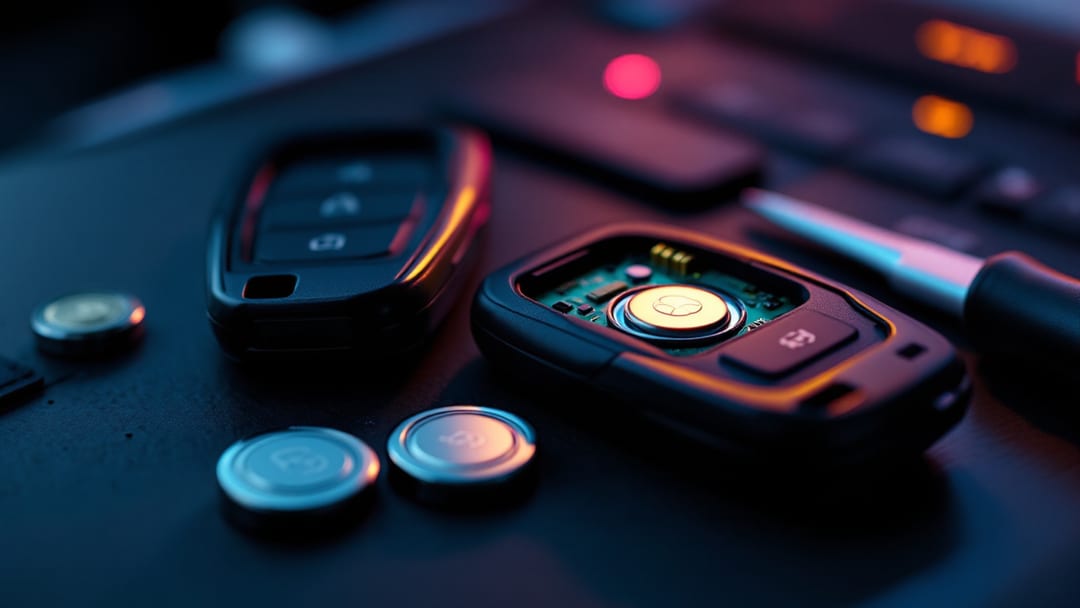
Why the key fob battery low warning won't go away
As of September 2026, the most common reason a key battery low warning stays on after a new coin cell is that the car is reading a different fob, usually a spare in the glovebox or someone else's bag, followed closely by a wrong-size or stale replacement cell. Neither costs anything to fix. If the warning survives both checks, the fob may be draining its own battery, and a replacement key in Arlington runs $140 to $550 depending on type. Call or text (817) 646-7134 if you get to the end of this list and the message is still there.
The warning is not a fault code. It is the car reporting the battery status that the fob sends every time it is read. That detail is useful, because it tells you where to look.
How the car knows your fob battery is low
A proximity fob does two jobs. It answers the car when you approach and press the start button, and it transmits when you press lock or unlock. On most vehicles, part of what it sends is a simple status: battery fine, or battery low.
The car stores that status and shows the warning. It does not measure the cell itself, it trusts what the fob tells it, and it only learns something new when a fob is read again.
That creates three situations where a fresh battery does not clear the message:
- The car is reading a different fob that still has a low battery.
- The fob still reports low because the new cell, or its contact, is poor.
- The car has not re-read the fob enough times to update the stored message.
Almost every case on this page falls into one of those three.
The seven causes, in the order to check them
| Cause | How common | What it costs to fix |
|---|---|---|
| A second fob in the car still has a low battery | Very common | A second coin cell |
| Wrong cell size or stale old stock | Common | The correct fresh cell |
| Battery contact bent, dirty or not seated | Common | Nothing, a careful clean and reseat |
| Warning needs more start cycles to clear | Common | Nothing, a few days of driving |
| Fob draining the new cell quickly | Less common | Replacement key |
| Fob near the end of its life | Less common | Replacement key |
| Vehicle-side receiver or antenna weakness | Uncommon | Vehicle diagnosis |
1. There is a second fob in the car
This is the one we see most, and it is the easiest to miss. Many households keep the spare in the glovebox, the centre console or a family member's handbag. When the car scans for keys, it can read that spare as well, and if its cell is the weak one, the warning stays on no matter what you did to the key in your hand.
The check: take every other fob out of the car, well away from it, and start the car with only the fob you just re-batteried. If the warning disappears, fit a fresh cell to the spare as well.
2. The replacement cell is wrong or stale
Fob cells are coin cells with part numbers that look almost identical. A CR2025 is the same diameter as a CR2032 but thinner. In a fob designed for the thicker cell, it can sit loosely and make a poor contact that reads as a low voltage the moment the fob transmits.
Age matters too. A cell that sat in a drawer or a multipack for years can read acceptably on a cheap tester and still sag under the brief load of a transmission. The fob reports what it sees at that moment, which is low.
The check: read the part number stamped on the old cell and fit exactly that part, from fresh stock. If you are not sure which cell your fob takes, the owner manual lists it.
3. The contact is bent, dirty or not seated
Inside the fob, the cell is held against a small spring clip or pad. Prying the case open can bend that clip, and fingers leave oils on the cell face that do not help. A cell fitted upside down in a fob that still half-works is also more common than people admit.
The check: open the fob again, confirm the positive side faces the way the old cell did, gently check that the clip presses firmly on the cell, and wipe the cell face with a dry cloth. Close the case fully. Many fobs only make contact when the two halves are clicked completely together.
4. The car has not updated the stored message yet
Some vehicles clear the warning on the next start. Others keep it for a few ignition cycles, or until the fob has been read several times, before the message updates. It is a stored status, not a live reading.
The check: drive normally for two or three days with only the one fob in the car. If the warning fades, nothing was wrong. If it is still there after several days, it is telling you something real.
5. The fob is draining the new cell
If a fresh cell of the correct type goes low again within weeks rather than years, the battery is not the problem. Something on the fob's circuit board is drawing current when it should not.
The usual culprits are a button stuck partly pressed, often the panic or trunk button on a fob kept in a tight pocket, moisture on the board from rain or a wash cycle, or a failing component. A fob that has been wet is its own subject, and our water-damaged key fob guide covers what can and cannot be saved.
The check: note the date you fitted the cell. If the warning returns inside a month, stop buying batteries and have the fob looked at.
6. The fob is simply wearing out
Fobs carry a small circuit board and an antenna that do not last forever. An older fob can start reporting low, lose range and miss button presses all at once. If yours also needs to be right against the door before it unlocks, our guide to a key fob that only works up close covers the overlap.
The check: compare it with your other fob. If the second fob, with a fresh cell, behaves normally and yours does not, the problem travels with the key.
7. The car's receiver is weak
On some vehicles, a weak signal arriving at the car is reported the same way as a weak fob. A damaged antenna, a failing receiver, or an aftermarket accessory interfering with reception can produce a low battery warning with a perfectly healthy key.
The check: try every fob you own, including a new one if you have it. If they all trigger the same message, the fault is in the car rather than the keys, and that is a diagnosis rather than a key purchase. Aftermarket remote starters and alarms are a frequent source of this kind of interference, and our guide to an aftermarket alarm blocking key programming explains how.
Note: A battery warning is advance notice, not a failure. Most proximity systems keep working for some time after it appears. The practical risk is a fob that genuinely dies in a parking lot, so know how to start the car with a flat fob before that happens.
Not the same as a fob that stopped working
It is worth separating this warning from two neighbouring problems, because they look similar and have different fixes.
The fob works but the warning stays on. That is this page.
The fob stopped working entirely after you changed its battery. That is a pairing or installation problem, not a warning, and it has its own sequence. If the car's 12-volt battery was also replaced recently, start with our guide to a key fob not working after a car battery change.
One fob works and the other does not. That points at a single key rather than the car, and our one fob stopped working guide walks through it.
What to do if the fob dies before you sort it out
If the warning turns into a fob that will not be detected at all, you still have two ways to get moving.
Hold the fob against the start button. Most proximity systems can read a fob with a dead cell at very short range through a backup coil. Press the button with the fob itself, or place it where the manual says, and the car will usually start.
Use the emergency blade. Almost every smart key hides a small metal blade that opens the driver door when the remote cannot. Our dead key fob battery guide shows both steps in order.
If the car starts, runs for a second or two and then stalls, that is not a battery warning any more. It is an immobiliser rejecting the key, and the car starts then dies guide covers that separately.
When the fob needs replacing, and what it costs
If you have worked through the list and the fob is either draining cells or reporting low with a fresh correct cell, the fix is a replacement key programmed to the car. As of September 2026 in Arlington, from this site's published service bands:
| Job | Arlington price, 2026 |
|---|---|
| Program a replacement fob you already own | $80 - $220 |
| New proximity smart key, supplied, cut and programmed | $220 - $550 |
| New bladed transponder key, cut and programmed | $140 - $280 |
The fob you already own has to be the correct part for your year and trim. Many used fobs sold online are locked to their previous vehicle, so send us the part number before you buy anything. The details of each service are on our key fob programming and smart key programming pages, and the smart key replacement cost guide breaks the proximity figures down by make.
Before any key is made, ownership is verified with photo ID against the registration or title. That is required under the vehicle security access rules set by the NASTF Vehicle Security Professional programme, and in Texas the locksmith doing the work operates under the Texas DPS Private Security Program. The friction is deliberate. The NHTSA vehicle theft prevention resources explain why immobilisers are built to be hard to add keys to, and that is exactly what protects your car when a fob goes missing.
Frequently Asked Questions
Why does my car still say key battery low after I replaced it?
The most common reasons are that the car is reading a different fob, usually a spare in the glovebox or a partner's bag, or that the new cell is the wrong size or a stale one that sags under load. Some vehicles also keep the warning until the fob has transmitted a fresh status several times. A genuine fault in the fob is further down the list and easy to confirm.
How long does it take for the low key battery warning to clear?
On many vehicles it clears at the next start once the car reads the fob again. On others it takes a few ignition cycles or a short drive before the stored message updates. If it is still there after several days of normal driving with only the fob you re-batteried in the car, the warning is telling you something real rather than lagging.
Can the wrong coin cell cause a battery low warning?
Yes. A CR2025 is the same diameter as a CR2032 but thinner, and in a fob designed for the thicker cell it can make poor contact and report a low voltage under load. Old stock matters too. A cell that sat in a drawer for years may read fine on a meter and still sag when the fob transmits. Use the exact part number printed on the old cell and a fresh one.
Is it safe to keep driving with the key battery low warning on?
Usually yes, in the short term. The warning is advance notice rather than a failure, and most proximity systems keep working for a while after it appears. The risk is that a fob that is genuinely draining will stop being detected at the worst moment. Know where your emergency blade is and how to start the car with the fob held against the start button.
Can a key fob drain its battery quickly?
Yes, when something on the circuit board is drawing current it should not, such as a button stuck partly pressed, moisture on the board, or a failing component. A fob that eats a fresh cell in weeks rather than years is not a battery problem. It is a failing fob, and the fix is a replacement key programmed to the car rather than another battery.
How much does it cost if the fob itself is failing?
As of September 2026 in Arlington, programming a replacement fob you already have runs $80 to $220, a new proximity smart key supplied, cut and programmed runs $220 to $550, and a bladed transponder key runs $140 to $280. The warning itself costs nothing to diagnose if you follow the checks in this guide first.
Could the car be the problem rather than the fob?
Occasionally. On some vehicles a weak signal at the car's receiver is reported the same way as a weak fob, so a damaged antenna or receiver can produce a battery warning with a healthy fob. The tell is that every fob, including a brand-new one, triggers the same message. That is a vehicle-side diagnosis rather than a key job.
Still seeing the warning in Arlington?
If you have checked the second fob, the cell and the contacts, and the message is still there after a few days, call or text (817) 646-7134 with the make, model and year. We cover North Arlington, South Arlington, the Entertainment District and Dalworthington Gardens and Pantego. Car keys only, mobile, and we will tell you on the phone if it sounds like a battery rather than a key.
Related pages
Need a car key in Arlington right now?
VIN-based flat-rate quote before we dispatch. NASTF VSP registered.
Call · (817) 646-7134