Dead Key Fob Battery? How to Start Your Car Anyway (Arlington TX)
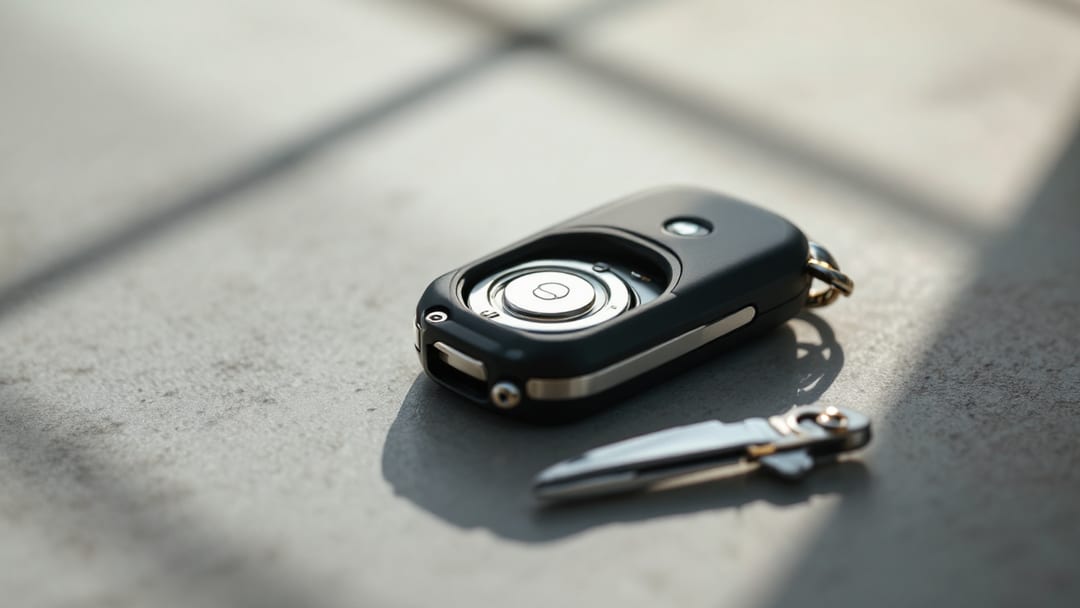
Your fob is dead. Here is how to start the car right now.
As of September 2026, a dead key fob battery does not strand you, and it almost never means you need a new key. Every push-to-start vehicle sold in the US has a backup path that reads the fob at a range of a few millimetres with no fob battery involved at all. Hold the fob flat against the start button and press the button with the fob itself. Most cars start. If yours does not, the sections below cover why. For anything that still refuses after all of this, call or text (817) 646-7134.
That is the emergency answer. The rest of this page is the detail, in the order you need it.
Step one: get into the car
A fob with a flat battery will not unlock the doors remotely, so start here.
Find the hidden blade. Nearly every proximity fob hides a small mechanical key inside its body. Look along the back or the edge for a small slider, catch or button. Release it and a blade pulls straight out, sometimes with a firm tug. Owners are frequently surprised this exists, because on a push-start car you may never have needed it.
Find the keyhole. On many vehicles the driver door keyhole is concealed behind a small plastic cap on the handle, which is there for looks rather than security. The blade tip prises it off, usually from a notch at the rear edge. Some models instead hide the lock behind the handle itself, which lifts away.
Expect the alarm. Opening a door mechanically while the car cannot see a valid fob often triggers the alarm. This is normal. It silences the moment you complete a valid start, because at that point the vehicle authenticates the key and stands down.
Step two: start the engine
The method depends on what kind of car you have.
Push-to-start vehicles. Press the brake pedal as usual, then hold the fob physically against the start button and press. The button contains an induction coil that energises the chip in the fob at very close range, exactly like an older transponder ignition does. Some manufacturers instead put that coil on the steering column, in the centre console tray, or in a slot in the armrest, and mark it with a small key icon. If pressing with the fob does nothing, look for that icon, hold the fob there, and press the button normally.
Bladed key with a remote built in. Nothing changes. The fob battery only powers the remote lock and unlock buttons; the transponder chip that talks to the immobiliser has no battery and never did. Put the key in, turn it, and the car starts as always.
Older cars with a separate remote. Same story. The remote is a convenience item, the key is the key.
"Most vehicles with push-button start include a backup method to start the vehicle if the key fob battery fails. The procedure is listed in the owner manual." — AAA automotive guidance
The owner manual is the definitive source for your specific model, and it takes thirty seconds to find the page. The AAA newsroom publishes roadside breakdown data every year, and dead batteries of both kinds remain one of the largest categories in it.
Step three: replace the cell
Once the car is running, do not leave this. A fob running on a failing cell will strand you again somewhere less convenient.
Open the fob at the seam, usually with the hidden blade or a coin. Read the number printed on the old battery. Most are CR2032, with CR2025 and CR1620 also common. Fit the replacement the same side up as the one that came out, because reversing it is far and away the most common reason a fresh battery appears to change nothing.
A few fobs are sealed or use a soldered cell. If yours does not open along an obvious seam, stop before you break the case.
What it means if the backup start path works
This is the most useful diagnostic on the page, so it is worth stating plainly.
If holding the fob against the start button starts the car, your key credential is intact. The immobiliser recognises the chip, the vehicle trusts the key, and nothing needs programming. You have a battery problem or a range problem, not a security problem. That rules out the expensive outcomes entirely.
If the backup path does not start the car even with a known-good cell fitted, the fault has moved. The usual candidates are a failed antenna or receiver in the vehicle, a 12-volt vehicle battery too weak to hold the system up, water inside the fob, or a genuinely lost credential. Our smart key diagnostic guide walks that split in order, and the fuller sequence for a car that will not acknowledge a key at all sits in our push-to-start diagnostic.
What each outcome costs in Arlington
| Situation | What it actually is | Arlington cost (2026) |
|---|---|---|
| Backup start works, new cell fixes it | Flat fob battery | Cost of the coin cell |
| Range shrinking over weeks | Cell going flat, or antenna weakening | Cell, or $80 - $180 diagnosis |
| New cell, still nothing, backup start works | Fob transmitter failing | $220 - $550 proximity fob |
| New cell, backup start also fails | Vehicle-side receiver or supply | $120 - $220 diagnosis |
| Fob has been wet | Corroded board | Often replacement |
| No working key at all | All keys lost | Higher tier, see below |
The replacement figures are parts-driven. A bladed remote head key is cheap. A proximity smart fob for a push-start car is the expensive part of this category, which is why our smart key programming page prices those separately from ordinary remotes.
The four things that shorten fob battery life
Texas heat. A fob left on a dashboard or in a door pocket through an Arlington August lives at temperatures that shorten coin-cell life measurably. Lithium cells tolerate heat better than most, but not indefinitely. This is the single biggest local factor.
Constant interrogation. A proximity fob stored within range of the car, on a hook by the garage door for example, keeps waking up and answering the vehicle all night. Storing keys a few metres further away genuinely extends cell life.
Pressing buttons in a pocket. A fob that gets compressed against keys and coins transmits repeatedly without anyone noticing.
A cell that was old on the shelf. Coin cells self-discharge slowly. A multi-pack bought years ago may already be partly flat.
If your fob has been rained on, dropped in a drink, or been through a wash cycle, the battery is not the story. Corrosion on the board is, and that is covered separately in our water-damaged fob guide.
The spare-key arithmetic, briefly
A dead fob is a good moment to check something. How many working keys do you actually have?
If the answer is one, the economics are worth a minute of attention. A spare programmed while your current key works is a short visit at the bottom of the price list. The same key made after the last one fails becomes all-keys-lost work, which is a different job entirely: the blade has to be originated from vehicle data, security access has to be established, and a first credential has to be written into a module built to resist exactly that. Our all keys lost service page sets out what that involves, and the price gap between the two is consistently wider than the cost of the spare.
The used-car second-key guide runs the same numbers for people who bought a vehicle with a single key in the envelope, which is how most one-key households got there.
When it is not the fob at all
Two vehicle-side faults imitate a dead fob closely enough to fool most people.
A weak 12-volt vehicle battery. On push-start cars especially, a car battery that cannot hold voltage under load produces exactly the symptoms of a dead fob: no response to the remote, no key detected, intermittent behaviour. If your dash lights dim hard when you try to start, or the car has been sitting for weeks, chase the vehicle battery first. The companion piece to this page, what happens after a battery change, covers the other half of that relationship.
A failing antenna or receiver. If the car reads the fob only at contact range and never at a distance, and a fresh cell changed nothing, the vehicle's reception is the suspect rather than the fob's transmission. That distinction is diagnosable in minutes with the right equipment and is exactly the split our fob only works up close guide is about.
Federal vehicle-security guidance treats the immobiliser as a core anti-theft system, and the NHTSA vehicle theft prevention material explains why the backup start path is deliberately short-range rather than convenient. In Texas, any locksmith doing key or programming work operates under the Texas DPS Private Security Program, and ownership verification is required before a key is produced for any vehicle.
Arlington notes
The backup start path is the single most useful thing on this page for local drivers, because the places fobs die are rarely convenient: the Entertainment District lots after a long event, a workplace lot at the end of a shift, an apartment garage off Cooper Street at night. Knowing that the fob still works when held against the button turns a tow-truck evening into a two-minute inconvenience.
If you are locked out rather than unable to start, that is a different job and the mechanical blade may not be the fastest route, particularly on a vehicle where the keyhole has seized from years of disuse. Our car lockout service covers that case.
Frequently Asked Questions
Can you start a push-button car with a dead key fob battery?
Yes, on essentially every push-to-start vehicle sold in the US. Manufacturers build in a backup path that reads the fob at a range of a few millimetres using an induction coil, so no fob battery is needed. Usually you hold the fob flat against the start button and press it with the fob itself, or hold it against a marked spot on the steering column or in the centre console, then press the button normally.
Where is the hidden key blade in a smart fob?
Almost every proximity fob conceals a small mechanical blade inside its body. Look for a small slider, button or catch on the back or edge of the fob, release it, and the blade pulls straight out. That blade opens the driver door when the fob cannot. On many cars the door keyhole itself is hidden behind a small plastic cap on the handle that pops off with the blade tip.
Will opening the door with the blade set off the alarm?
Often yes, and that is normal rather than a sign anything is wrong. The vehicle sees a door opening without a recognised fob signal and assumes the worst. In nearly every case the alarm silences as soon as you complete a valid start using the backup path described above, because at that moment the car authenticates the key and stands down.
How long does a key fob battery last?
Typically three to five years in normal use, though heat shortens it and a fob that lives in a hot car in a Texas summer will sit at the lower end. The first symptom is usually reduced remote range rather than total failure, so a fob that has started needing you to stand closer to the car is a fob telling you the cell is going.
What battery does my key fob take?
Most use a CR2032 coin cell, with CR2025 and CR1620 also common depending on the fob. The type is printed on the cell itself, so the safest method is to open the fob, read the number off the old battery, and match it. Fit the new cell with the same side facing up, since reversing it is the most common reason a fresh battery appears to change nothing.
My fob battery is new and the car still says no key detected. What now?
That moves the problem off the fob and onto the vehicle or the fob electronics. The usual suspects are a failed antenna or receiver, a low 12-volt vehicle battery browning out the system, water damage inside the fob, or a lost credential. Try the backup start path first, because if that works the credential is intact and you are chasing a reception problem rather than a programming one.
How much does it cost to sort a dead fob in Arlington?
A coin cell costs a few dollars and you can fit it yourself in two minutes. If the fob itself has failed, a replacement runs $140 to $280 for a bladed remote head key and $220 to $550 for a push-to-start proximity fob in 2026, cut and programmed on site. A programming or resync session with no new part typically runs $80 to $220.
Should I keep a spare fob for this situation?
Yes, and it is the cheapest insurance in this whole category. A spare programmed while your current key still works is a short, inexpensive visit. The same key made after the last one fails becomes all-keys-lost work, which costs substantially more and takes longer. The gap between those two prices is consistently larger than the cost of the spare itself.
Fob dead and the car still refusing? Here is how to reach us
Tell us the year and make, and whether holding the fob against the start button does anything, then call or text (817) 646-7134 for a flat rate before dispatch. We cover North Arlington, South Arlington, the Entertainment District, and Dalworthington Gardens and Pantego. Car keys only, mobile, no tow.
Related pages
Need a car key in Arlington right now?
VIN-based flat-rate quote before we dispatch. NASTF VSP registered.
Call · (817) 646-7134