Transponder vs Smart Key: Arlington TX Owner Guide
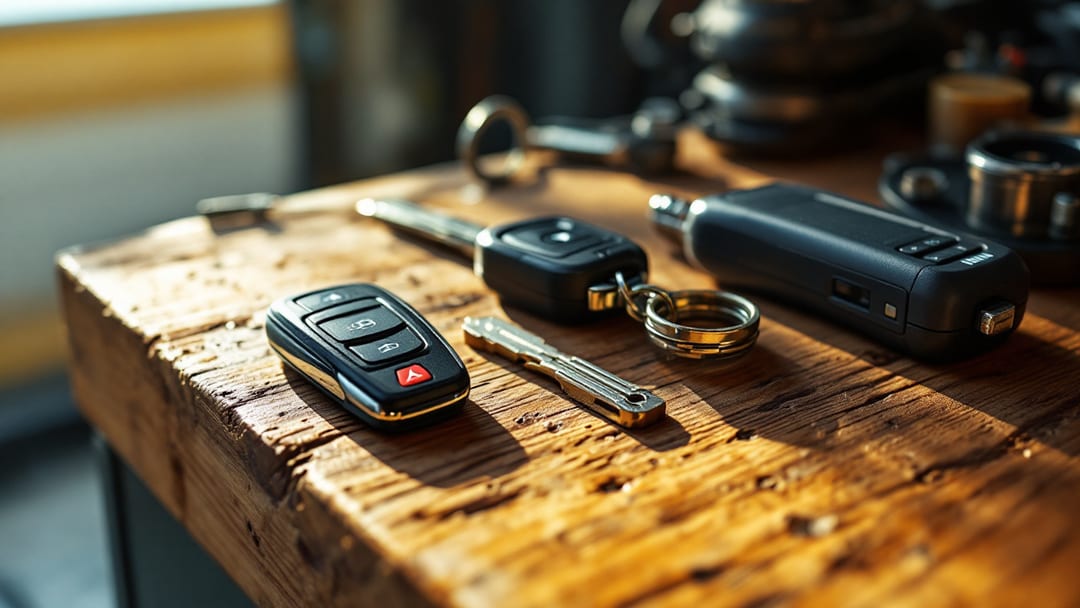
What is the real difference between a transponder key, a smart key, and a remote head key?
As of September 2026, most cars on Arlington roads use one of three electronic key types, and Arlington Car Keys can cut and program every one of them at your location, usually for somewhere between $110 and $475 depending on the vehicle and key type. The three features that matter most to you: we cut keys by VIN so an all-keys-lost car still gets a working key, we program the immobilizer on-site with professional equipment, and we can erase lost fobs from your car's memory. Call or text (817) 646-7134 for a flat-rate quote before we roll out.
The words "transponder key," "smart key," and "remote head key" get thrown around like they mean the same thing. They do not. Each one is cut differently, programmed differently, and priced differently. Knowing which one your car uses saves you money and saves you the headache of ordering the wrong part. This guide breaks down all three, plus the VIN-cut process that makes replacing a lost key possible in the first place.
How does a transponder chip key work?
A transponder key is a mechanical key with a tiny glass or carbon chip embedded in the plastic head. "Transponder" is short for transmit-responder. When you insert the key and turn it, a coil ring around the ignition sends a low-power radio signal. The chip wakes up, transmits a unique code back, and the car's immobilizer decides whether to let the engine start.
If the code does not match, the starter may crank but the engine will not run, or it will start and immediately stall. This is the anti-theft feature that made hot-wiring nearly obsolete. Transponder keys became standard on most vehicles from the late 1990s onward.
There are two jobs in every transponder key replacement: the mechanical cut and the electronic programming. The metal blade has to be cut to match your door and ignition locks, and the chip has to be programmed to your car's immobilizer. A hardware store can copy the blade, but it cannot program the chip, which is why a copied key will open your doors but never start the engine. That trips up a lot of people.
The National Automotive Service Task Force notes that modern vehicle immobilizer and key programming increasingly requires secure, vehicle-specific data and credentialed access, which is why not every key can be cut at a corner kiosk. — National Automotive Service Task Force (NASTF), nastf.org/vsp
How is a smart proximity key different?
A smart key, also called a proximity key or push-to-start fob, never goes into an ignition. You keep it in your pocket or bag. Antennas in the car detect the fob when it is inside or right next to the vehicle, unlock the doors when you touch the handle, and let you start the engine by pressing a button on the dash.
Inside, a smart fob is doing everything a transponder does plus more. It has a proximity transmitter, a rolling-code remote for lock and unlock, and usually a mechanical emergency blade tucked inside the fob body for when the battery dies. Because there is so much more electronics packed in, smart keys cost more to buy and take more steps to program.
Smart keys dominate on newer Toyota, Lexus, Honda, Ford, BMW, and Mercedes-Benz models. If you drive an EV like a Tesla, the "key" may even be a card or a phone app, which is its own category. When a push-to-start car will not fire up, the cause is often the fob, the fob battery, or the immobilizer handshake failing, which we cover in our push-to-start diagnostic guide.
What is a remote head key, and where does it fit in?
A remote head key is the in-between design. It looks like a traditional key you insert and turn, but the plastic head is a fat remote with lock, unlock, trunk, and panic buttons built in. Under the plastic is a transponder chip, exactly like a plain transponder key. So a remote head key is really a transponder key with an integrated remote.
Many Ford, Toyota, and Honda models from the 2000s and 2010s used remote head keys before the industry shifted to full proximity fobs. Because the remote and the transponder are fused into one part, if the remote buttons fail you usually replace the whole key rather than a separate keyfob. That is worth knowing before you pay to replace a key that is only half-broken.
Which key does my car actually have?
Here is the fastest way to tell. If you slide a metal key into the ignition and twist to start, you have a transponder key or a remote head key, the difference being whether the head has buttons. If you press a Start button with the fob in your pocket, you have a smart proximity key. When in doubt, text us your year, make, and model and we will confirm before we come out.
| Key type | How you start the car | Has buttons? | Chip inside? | Typical DFW replacement range |
|---|---|---|---|---|
| Basic transponder key | Insert and turn | No | Yes | $110 – $220 |
| Remote head key | Insert and turn | Yes | Yes | $150 – $300 |
| Smart proximity fob | Push-to-start, fob in pocket | Yes | Yes (plus proximity) | $220 – $475 |
| Non-transponder mechanical | Insert and turn | No | No | $45 – $110 |
Prices are 2026 Dallas-Fort Worth ranges for cut-and-program at your location and vary by make, model, and whether it is an add-a-key or all-keys-lost job. Luxury European and some EV keys run higher. Text (817) 646-7134 for your exact number.
How does VIN-cut key cutting work when all keys are lost?
Cutting a key by copying an existing one is easy. But what happens when there is no key to copy, because you lost all of them? That is where VIN-cutting comes in.
Every vehicle leaves the factory with a specific key code, essentially the pattern of cuts that matches your locks. That code is tied to your vehicle identification number. A qualified locksmith can retrieve the bitting code, either from the code series or by decoding your existing lock, and cut a brand-new key from scratch, no original required. This is the only way to make a working key for an all-keys-lost car, and it is precise because it matches the factory specification rather than a worn copy of a copy.
VIN-cutting is central to any all-keys-lost job. For a deeper look at the process, the EEPROM reads some cars need, and realistic timelines, see our lost-all-keys EEPROM guide. And whether it is one key or all of them, our lost car keys service covers the full replacement.
A real Arlington scenario: a smart fob failure near The Parks Mall
Picture a driver in South Arlington near The Parks Mall at Arlington, off Interstate 20. She drives a push-to-start Toyota, and one morning the dash flashes "Key not detected" and the car refuses to start. She assumed she needed a whole new car computer. She did not.
Her smart fob's internal battery had degraded to the point that the proximity signal was too weak, and her only spare had been lost months earlier, so the car was effectively down to a failing key. Rather than tow it to a dealer, she texted us the year, make, and model. We came to her, confirmed the fob was the culprit, cut a fresh VIN-based emergency blade, programmed a new smart key to the immobilizer, and erased the old lost fob from the car's memory so it could never start the vehicle again. She was back on I-20 in under an hour. That combination of on-site programming and lost-key erasure is exactly why calling a mobile locksmith beats a tow every time.
Can a locksmith program every key type on-site?
For the large majority of vehicles, yes. A properly equipped mobile locksmith can cut and program transponder keys, remote head keys, and smart proximity fobs right in your driveway. The equipment reads the immobilizer, adds the new key, and, when needed, wipes lost keys.
A small number of vehicles, especially certain late-model European cars and some EVs, store immobilizer data in a way that occasionally requires secure vehicle-specific access or, rarely, bench work on a module. When that is the case, we tell you before we start. For most Toyota, Honda, and Ford owners in Arlington, though, everything happens on-site. See our dedicated pages for transponder key programming, smart key programming, and key fob programming.
What should Arlington drivers budget for a replacement key?
The honest answer is that it depends heavily on your specific vehicle. A basic transponder key for an older economy car is inexpensive. A smart proximity fob for a loaded luxury SUV can be several times that. The single biggest cost drivers are the key type, the make, and whether you still have a working key to clone from or need a full all-keys-lost VIN-cut.
Independent pricing references like Kelley Blue Book and Edmunds are useful for understanding your car's value and features, but for the actual key cost the fastest path is to text us your details. Comparing a mobile locksmith against a dealership almost always favors the locksmith on both price and convenience, which we break down in our locksmith vs dealer cost comparison. For the full walkthrough of mobile cutting and programming, see our car key replacement guide.
If you have already narrowed it to a bladed chip key, our dedicated guide to transponder key replacement in Arlington breaks the 2026 pricing down by chip family and covers how long each tier takes on-site.
Arlington Car Keys is a licensed and insured mobile automotive locksmith serving all of Arlington, from North Arlington near the Entertainment District and AT&T Stadium down to South Arlington and the neighborhoods around UTA and Dalworthington Gardens. Locksmith companies in Texas are regulated by the Department of Public Safety Private Security Program, and you can verify a company's standing through Texas DPS. You can also learn more about vehicle theft prevention from the NHTSA.
What has changed going into late 2026
Two things worth updating if you last read a guide like this earlier in the year.
Proximity fobs are now the default, not the upgrade. On the vehicles coming through Arlington driveways this autumn, a push-button start is standard equipment well below the luxury tier. That matters for budgeting, because the proximity fob is the expensive part in this whole category and an owner who assumes their new compact SUV takes a cheap bladed key is usually wrong.
The cheap-fix-first check is more useful than ever. A large share of the calls we take that begin "my key has stopped working" end with a coin cell rather than a key. Before assuming a key type has failed, try the backup start path: hold the fob against the start button and press. If the car fires, your credential is intact and the fob battery is the fault. The full sequence is in our dead key fob battery guide.
A recent Arlington job makes the point. A driver near Lincoln Square was quoted for a replacement proximity fob by a shop that never asked what the car did when the fob was held to the button. It started every time. The fob needed a battery and a resync, not replacing, and the bill was a fraction of the quote.
Card-style keys are the outlier worth naming separately, because they behave differently again from both bladed and proximity keys. Our Tesla key card guide covers that case.
Frequently Asked Questions
How do I tell if my car uses a transponder key or a smart key?
If you physically insert a key into the ignition and twist it, you have a transponder or remote head key. If you keep the fob in your pocket and press a Start button, you have a smart proximity key. Check your owner's manual or text us the year, make, and model for a definitive answer.
Can a locksmith cut and program a transponder key cheaper than the dealer?
In most cases yes. A mobile locksmith in Arlington typically charges less than a dealership because there is no towing, no shop appointment, and no dealer markup on the blank. Transponder keys usually run a fraction of dealer pricing, and we come to your driveway to cut and program on the spot.
What is a VIN-cut key and do I need one?
A VIN-cut key is a key cut from the factory bitting code tied to your vehicle identification number rather than by copying an existing key. It is essential when all keys are lost, because there is no original to duplicate, and it produces a precise cut that matches your original factory lock wafers.
Do smart proximity keys cost more than transponder keys to replace?
Yes, smart proximity fobs almost always cost more than a basic transponder key. The fob contains more electronics, a proximity antenna, and a rolling-code remote, and the programming procedure is more involved. Prices vary widely by brand, so text your year, make, and model for a flat-rate quote.
Will a new transponder or smart key stop my old lost key from working?
When we program a new key during an all-keys-lost job, we can erase the immobilizer memory so any previously lost keys stop starting the car. If you still have a working key and only want a spare, your existing keys keep working and we simply add the new one to the system.
How long does it take to program a smart key in Arlington?
Most transponder and smart key programming jobs take roughly 20 to 45 minutes on-site once we reach you, depending on the vehicle and whether it is an add-a-key or an all-keys-lost situation. All-keys-lost cars that need a security wait timer can take longer, and we tell you upfront.
Ready to replace or add a key in Arlington?
Whether you have a basic transponder, a remote head key, or a push-to-start smart fob, we cut and program it at your location across Arlington. Text us your year, make, and model and we will confirm the key type and give you a flat-rate quote before we head out.
Call or text (817) 646-7134 for a flat-rate quote, or reach us through our contact page. We serve Arlington and surrounding areas, and we work on brands from Toyota and Honda to Ford and beyond.
Need a car key in Arlington right now?
VIN-based flat-rate quote before we dispatch. NASTF VSP registered.
Call · (817) 646-7134