Key Works in the Door but Not the Ignition? Arlington TX Guide
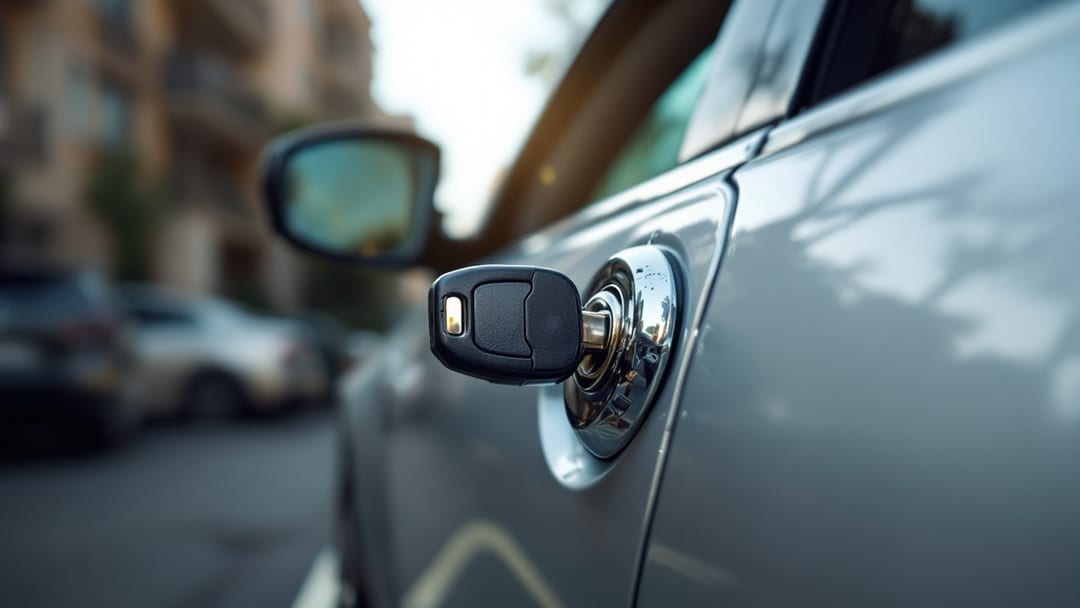
Why your key works in the door but not the ignition
As of October 2026, a key that opens the door but will not work the ignition comes down to one of six causes in Arlington, and the fix runs from $0 to $480 depending on which. The short version: the door lock and the ignition read the same key in two different ways. The ignition is used every time you drive, wears far faster, and on many cars checks more of the key than the door does. So a tired key or a tired ignition can pass the easy lock and fail the hard one. Call or text (817) 646-7134 and we will tell you which it sounds like before anyone is dispatched.
The first thing to pin down is which of two different problems you have, because they share a description and nothing else.
Two problems that sound the same
The key will not turn in the ignition. It goes in, and it stops. That is mechanical. The key, the cylinder or the steering lock is the cause.
The key turns, and the engine will not start. That is electronic. The lock is fine. The immobiliser is refusing the key.
The door lock tells you something different in each case, which is why it is a useful clue.
| What happens | What the door result tells you | Most likely cause |
|---|---|---|
| Opens door, will not turn ignition, steering wheel is rigid | Key cut is probably fine | Steering lock is loaded |
| Opens door, will not turn ignition, wheel is free | Key is close but not exact, or ignition is worn | Worn key or worn ignition wafers |
| Opens door, turns ignition only with jiggling | Wear is the cause, on one side or both | Worn ignition, often with a worn key |
| Opens door, does not fit the ignition at all | The two locks are not keyed alike | Ignition was replaced, different key |
| Opens door, turns ignition, engine will not start | Mechanical side is fine | No chip, wrong chip or chip not programmed |
| Opens door, turns ignition, starts then stalls | Mechanical side is fine | Immobiliser rejecting the key |
The six causes, in the order to check them
1. The steering lock is loaded
When the wheel is turned against the lock after the engine is off, a steel pin presses hard into the column. The key cannot turn until that pressure is released. The door has no equivalent, so the key feels perfect there.
Turn the steering wheel firmly one way while turning the key gently. If it does not release, try the other direction. This costs nothing and solves a surprising share of these calls. Our guide to a car key that will not turn in the ignition covers the technique in detail.
2. The key is worn
A key is a set of precise heights. Every use rounds them a little. After years, the peaks are lower and the valleys shallower than the lock was built for.
The door often tolerates this. Many cars use fewer of the key's cut positions in the door than in the ignition, and the door lock has usually seen far less use, especially on a car that has been opened by remote for most of its life. The ignition reads the whole key and has no slack left.
The test is a second key. If a less-used spare turns the ignition smoothly, the daily key is worn and the ignition is fine.
3. The key is a copy of a copy
Every duplicate carries the wear of the key it was traced from, plus a small error of its own. A copy of a copy of a copy can drift far enough to open the door and miss the ignition.
The cure is not another copy. It is a key cut to the original code for the vehicle, so the cuts go back to factory heights. That is what VIN-cut car keys are for.
4. The ignition cylinder is worn
Inside the cylinder are small spring-loaded wafers that the key lifts into line. With enough use they wear, stick or crack. Some makes are known for it, and it tends to arrive gradually: first the key needs a wiggle, then it needs a particular angle, then it stops.
If your good spare key also struggles, the cylinder is the worn part. This is the case where a new key alone will not help, and where continuing to force it leads to a snapped blade. A broken key in the ignition is the expensive way to find out.
5. The ignition and the door are keyed differently
If an ignition cylinder was replaced at some point and not keyed to match the original, the car has two keys: one for the doors, one for the ignition. If you were only handed one of them, it will work in exactly one place.
This is common on older used cars and on cars repaired after a theft attempt. The clue is that the key does not merely refuse to turn. It often will not slide all the way in, or it feels wrong from the first millimetre.
The fix is to rekey the ignition to the door key, or cut one key that works both, so the car is back to a single key. On a recently bought car, the used-car second key guide covers what else to check.
6. The key turns, but it has no working chip
Door locks have no chip reader. They only care about the metal. The ignition cares about the metal and then hands the question to the immobiliser, which looks for a transponder chip it recognises.
So a plain metal copy from a hardware store kiosk opens the door, turns the ignition, lights the dash, and never starts the engine. The same happens with a correct chip key that was cut but never programmed, and with a key whose chip was damaged by a drop or by water.
The sign is a security or key-shaped light on the dash that flashes or stays on while the engine cranks or sits silent. Our guides to a car that cranks but will not start with the security light on and a car that starts then dies cover that branch properly, and the transponder versus smart key guide explains what the chip is doing.
The checks to run before calling anyone
Do these in order. Each one takes under a minute.
- Turn the wheel while turning the key. Both directions. Rules out the steering lock.
- Check the shifter. Fully in Park, or Neutral on a manual. Some cars will not let the key turn otherwise.
- Look at the key. Compare it with a spare if you have one. Rounded peaks, a visible bend or a hairline crack near the head all point at the key.
- Try the spare. This is the most valuable test there is. Spare works, daily key does not: worn key. Neither works: worn ignition.
- Note whether it turns at all. Will not turn is mechanical. Turns but no start is the chip.
- Watch the dash. A flashing security or key light after the key turns points at the immobiliser.
Then stop. Past this point, force is the only tool left, and force is how a $90 service call becomes a snapped key and a replaced cylinder.
Note: Do not spray oil-based lubricant into an ignition that is sticking. It frees the wafers for a few days, then holds dust against them. A lock that only works after spraying is a worn lock, and the spray hides the wear until the day it fails completely.
What each fix costs in Arlington
These are the figures this site publishes for ignition and key work in Arlington in 2026. All of it is done on-site.
| Cause | Fix | Cost in Arlington | Typical time |
|---|---|---|---|
| Steering lock loaded | Release technique, no parts | $0 | Seconds |
| Worn key or copy of a copy | New key cut to code, programmed if chipped | $45 - $280 | 20 - 40 min |
| Sticking wafers, debris | Cylinder cleaned and serviced | $90 - $180 | 30 - 60 min |
| Worn ignition cylinder | Cylinder replaced, keyed to your existing key | $180 - $480 | 45 - 120 min |
| Ignition keyed differently from the door | Ignition rekeyed to match the door key | $180 - $320 | 45 - 90 min |
| Key turns, no chip or unprogrammed chip | Transponder key cut and programmed | $140 - $280 | 30 - 45 min |
The whole ignition repair service band is $180 to $480, and the ignition repair cost guide breaks it down by symptom and by make. The chip-key row is the transponder key programming band.
One point on the cylinder row that matters to your wallet: a replaced cylinder should be keyed to the key you already have. If it is not, you leave with a new ignition key and your old door key, which is cause number five created on purpose. Ask for it to be keyed alike. We do it by default.
Repair, rekey or replace
Three different jobs get described as "fixing the ignition", and they are not the same price.
Service. The cylinder is cleaned, the wafers freed and the lock relubricated properly. Right when the lock is dirty or lightly sticking and the wafers are still sound.
Rekey. The wafers inside the cylinder are replaced or rearranged, either to restore worn ones or to match a different key. Right when the housing is sound and the wear is in the wafers, and right when the ignition and door need to be brought back to one key.
Replace. A new cylinder, keyed to your existing key. Right when the housing is damaged, a theft attempt has broken it, or the wear is past rekeying.
The guide to ignition switch repair versus replacement covers how that decision is made, including the electrical switch behind the cylinder, which is a separate part and a separate fault.
Where this shows up in Arlington
Older daily drivers. High-mileage sedans and trucks whose owners have used one key for a decade. The key and the ignition have worn together, and the first new copy made from that key is the one that fails.
Cars opened by remote. If you have locked and unlocked with the fob for years, the door lock is nearly unworn, so it accepts a key the ignition has long since outgrown. The door is not proof that the key is good.
Used cars with a mixed history. A previous ignition repair that was never keyed alike. We see this on vehicles bought from small lots and private sellers across South Arlington and along Division Street.
Cars with a hardware-store spare. The spare was tested in the door at the store, it worked, and it went in a drawer. Months later it turns the ignition and will not start the car.
Before paying for any ignition repair, it is worth a minute to check whether the fault is covered by an open recall. Ignition components have been the subject of manufacturer recalls, and recall work is free at the dealer. You can check by VIN on the NHTSA recalls page.
What happens on an Arlington visit
- Quote. Tell us the make, model and year, whether the key turns at all, and whether a spare behaves differently.
- Verify. Photo ID matched to the registration or title. In Texas the locksmith doing this work operates under the Texas DPS Private Security Program.
- Diagnose. The key is decoded and measured against the original code. That one step separates a worn key from a worn cylinder, so you do not pay for the wrong one.
- Fix. New key, service, rekey or replacement, with the ignition and doors kept on one key.
- Test. Every key you own tried in the ignition and the doors, and the engine started, before we leave.
We cover North Arlington, South Arlington, the Entertainment District, and Dalworthington Gardens and Pantego. Guidance from the Associated Locksmiths of America on automotive lock service follows the same order we use: rule out the key first, then the mechanical lock, then the electronics.
Frequently Asked Questions
Why does my key work in the door but not the ignition?
Because the two locks check the key differently. The ignition cylinder is used every time you drive and wears far faster than a door lock, and on many cars it also reads more of the key's cuts. A worn key or a worn ignition can still pass the door and fail the ignition. If the key turns but the engine will not start, the cause is the chip, which the door never checks.
Can a worn key open the door and still fail in the ignition?
Yes, and it is the most common version of this problem. Door locks on many cars use fewer of the key's cut positions than the ignition does, and they have seen far less use. A key that has worn a few thousandths of an inch can still lift the door wafers into place while missing the tighter ignition. A new key cut to the original code usually settles it.
My key turns in the ignition but the car will not start. Is that the same problem?
No. If the key turns, the mechanical side is fine. The immobiliser is refusing the key because its chip is missing, damaged or not programmed. Door locks have no chip reader, so a plain metal copy from a hardware store will open the door and turn the ignition without ever starting the engine. That is a programming job, not an ignition repair.
Could my ignition and door use different keys?
Yes. If an ignition cylinder was replaced at some point and not keyed to match, the car ends up with one key for the doors and another for the ignition. It is common on older used cars. The fix is to rekey the ignition to the door key or cut a single key that works both, so the car goes back to one key.
How much does it cost to fix a key that will not turn the ignition in Arlington TX?
As of October 2026, a new key cut to code runs $45 to $280 depending on whether it needs a chip programmed, servicing a sticking cylinder runs $90 to $180, and a worn ignition cylinder that has to be replaced and keyed to your existing key runs $180 to $480. Which one applies depends on what the diagnosis finds.
Should I spray something into the ignition to free it?
Avoid oil-based sprays. They free the lock for a few days, then collect dust and turn it into paste, which makes worn wafers stick worse. A lock that only works after spraying is a worn lock. If you want to try something before calling, a small amount of dry lubricant made for locks is the only safe choice, and it is a test, not a repair.
Is it safe to keep jiggling the key until it turns?
It works until the day it does not, and that day is rarely convenient. Each forced turn wears the key and the wafers a little more, and the usual ending is a key that will not turn at all or a blade that snaps in the cylinder. If you are jiggling daily, the repair is already due and is cheaper before the failure than after.
Can an ignition be repaired at my home in Arlington?
Yes. Ignition cylinders are serviced, rekeyed and replaced on-site in Arlington, at a home, workplace or parking lot. The car does not need to be towed, which matters because a car whose key will not turn cannot be driven anywhere. Most visits are finished in 45 to 120 minutes depending on the make.
Key works the door but not the ignition? Here is how to reach us
Tell us the make, model and year, whether the key turns at all, and whether a spare behaves any differently, then call or text (817) 646-7134. Those three answers usually tell us which of the six causes you have before we leave. Car keys and ignitions only, mobile, no tow.
Related pages
Need a car key in Arlington right now?
VIN-based flat-rate quote before we dispatch. NASTF VSP registered.
Call · (817) 646-7134