Key Fob Reprogrammed Itself to a Different Car
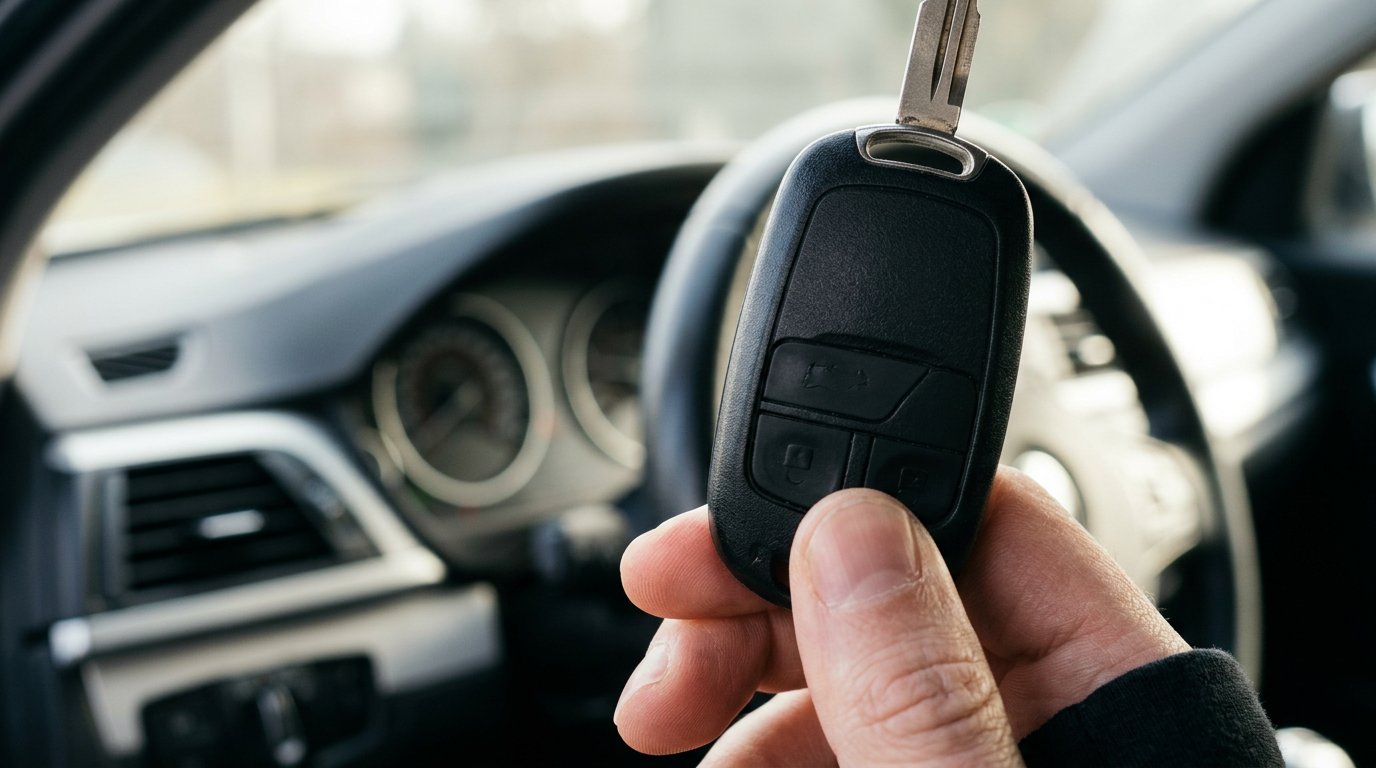
Key Fob Reprogrammed Itself to a Different Car
Can a Key Fob Reprogram Itself to a Different Car? (Arlington TX)
No, a key fob cannot genuinely reprogram itself to a different car. What people describe as a "key fob reprogrammed itself to a different car somehow" is almost always a collision of rolling-code signals, physical similarity between fobs, or confusion about which key belongs to which vehicle. Call or text (817) 646-7134 for diagnostic help if your fob is behaving strangely in Arlington, Grand Prairie, or Mansfield.
This article explains what really happens when a fob appears to operate the wrong vehicle, why rolling-code collisions are statistically rare but technically possible, and what to check before you assume something has gone wrong with your car's security system.
What Really Happens When a Fob Seems to Switch Cars
Automotive key fobs do not "learn" new vehicles on their own. Programming a fob to a car requires either deliberate technician action using specialized equipment or a manufacturer-specific on-board programming sequence that demands physical access to the ignition, brake pedal, and usually a working master key. There is no mechanism for a fob sitting idle on a counter to spontaneously bond with a passing vehicle.
When someone reports that their fob now opens a neighbor's car or that a stranger's fob unlocked theirs, the explanation falls into one of three categories: the two fobs were already paired to the same make and model with an extremely rare code overlap, the person has confused which physical key belongs to which car, or the remote's buttons activated a vehicle with a similar rolling-code state. None of these scenarios involve true reprogramming.
The most common trigger is simple human error. If you own two similar vehicles—two Honda CR-Vs from consecutive years, for example—and both fobs live on the same keyring, it is easy to press the unlock button for Car A while standing near Car B. Because many owners add aftermarket fob covers or use identical keychain accessories, visual confirmation becomes unreliable. Before diagnosing a technical fault, confirm that you are holding the correct fob for the vehicle in question.
Why Your Fob Appears to Work on the Wrong Vehicle
Modern remotes use rolling-code encryption to prevent replay attacks. Each time you press a button, the fob generates a new code in a sequence known only to the fob and the car's receiver module. The two devices stay synchronized by advancing through the same mathematical sequence. If they drift apart—because someone pressed the fob hundreds of times out of range—the car maintains a "window" of acceptable future codes to re-sync without requiring manual intervention.
A rolling-code collision occurs when two vehicles from the same manufacturer, using the same radio frequency and encryption generation, happen to fall within each other's acceptance window. This is vanishingly unlikely but not impossible, especially with older or entry-level keyless systems that use shorter code lengths. When it does happen, one fob may momentarily unlock or start a second vehicle until the systems drift apart again through normal use.
Physical resemblance compounds the confusion. Many manufacturers use identical fob shells across multiple model years and trim levels, changing only the internal chip and blade. A 2019 and 2021 Toyota Camry fob look indistinguishable from three feet away. If you park next to a similar car in an Arlington lot and your fob opens its doors, the likeliest explanation is that you walked to the wrong vehicle, not that your fob reprogrammed itself.
Aftermarket or cloned fobs raise the probability of cross-operation. Generic replacement remotes purchased online sometimes ship with insufficiently randomized code sequences, increasing the chance that two units share overlapping states. Reputable automotive locksmiths program OEM-equivalent or manufacturer-authorized aftermarket units that maintain proper code uniqueness.
The Rolling-Code Collision: When Two Remotes Broadcast the Same Signal
A genuine rolling-code collision requires multiple conditions to align simultaneously. Both vehicles must use the same encryption algorithm, operate on the same radio frequency (typically 315 MHz in North America or 433 MHz elsewhere), and have receiver modules from overlapping production batches with compatible acceptance windows. The two fobs must also be broadcasting codes that fall within a few steps of one another in the pseudorandom sequence.
Even when all conditions align, the overlap is temporary. As soon as the legitimate owner uses their fob on the correct car, both systems advance their internal counters and the window closes. The accidental pairing disappears without manual intervention. If your fob consistently operates a neighbor's vehicle across multiple days, you are either holding their fob by mistake or dealing with a cloned remote that was deliberately programmed to both cars.
Security researchers have documented rolling-code collisions in academic settings, but real-world reports remain rare. Manufacturers increased code-bit length and tightened synchronization windows throughout the 2010s, making overlaps progressively less likely. If you believe you are experiencing a persistent collision, document the make, model, and year of both vehicles and contact an automotive locksmith for verification before assuming a security flaw.
For vehicles with push-to-start ignition, the collision scenario becomes even less plausible. Smart-key systems use bidirectional challenge-response authentication that requires the fob to answer cryptographic queries unique to that specific car. A fob cannot answer correctly for a vehicle it was never programmed to, no matter how closely the rolling codes align. If a push-button start activates with the wrong fob, the two keys were programmed to the same car at some point—possibly during a previous ownership transfer or dealer service visit.
What to Do If Your Fob Opens or Starts Another Car
First, verify that you are holding the correct physical key. Check the blade cut, any stamped key code, and the fob's button layout against your vehicle's documentation. If you own multiple cars or recently purchased a used vehicle with spare keys, separate each fob onto a distinct keyring with a labeled tag. This eliminates confusion before you pursue technical diagnostics.
Second, test the behavior systematically. Stand next to the vehicle that responds incorrectly and press the fob's unlock button. Does the car's interior light activate, or do only the mirrors fold? Does the ignition turn over, or does the immobilizer block the starter? Record each result. Many aftermarket alarm systems or add-on keyless modules respond to broader radio signals than the factory immobilizer, creating the illusion that a foreign fob "works" when it only activates an accessory function.
Third, confirm ownership and VIN for both vehicles if the situation involves a neighbor or parking-lot encounter. In Arlington and across Texas, automotive locksmiths must follow state vehicle-ownership verification requirements before reprogramming or duplicating keys. If someone claims your fob opens their car, ask to see their registration and compare the VIN against your own vehicle's documentation. Mistaken identity of the car—not the fob—is a frequent culprit.
If you determine that two legitimately separate vehicles are responding to the same fob, contact a mobile automotive locksmith who can read each car's paired-key list from the immobilizer module. This diagnostic step, which takes a few minutes with the right equipment, will show whether the fob in question is actually enrolled to both vehicles. If it is, someone performed a programming procedure at some point; fobs do not appear in these lists by accident. If the fob is not enrolled, the response you observed was likely a transient rolling-code overlap or an aftermarket alarm coincidence, not a security breach.
When the Problem Is Actually Your Car, Not the Fob
Intermittent electrical faults often mimic fob misbehavior. A failing body control module, corroded antenna coil, or loose ground connection can cause a car to accept or reject fob signals unpredictably. Owners interpret the randomness as "the fob changed cars," when the fob is broadcasting correctly and the car's receiver is malfunctioning.
Before you replace or reprogram a fob, test it on a known-good vehicle of the same make if possible. Many Arlington residents with two household cars of the same brand can quickly rule out fob failure this way. If the fob works flawlessly on Car B but fails intermittently on Car A, the fault lies in Car A's receiver, antenna, or power supply—not in the remote.
Battery voltage below threshold also produces bizarre symptoms. A weak battery might transmit enough signal to unlock doors (which requires low security authentication) but fail to start the engine (which requires full cryptographic handshake). Owners conclude that the fob "partially works on the wrong car" when in fact it fully works on the correct car but lacks the power to complete high-security functions. Replace the fob battery with a fresh unit of the correct voltage and chemistry before pursuing complex diagnostics. For step-by-step guidance, see our article on dead key fob battery troubleshooting.
Immobilizer faults present another red herring. If your car starts briefly then dies after two seconds, the issue is almost always an immobilizer authentication failure—not a fob that reprogrammed itself. The immobilizer module recognizes the key during the initial crank but loses synchronization before enabling fuel or ignition. This symptom requires immobilizer relearning or module replacement, not fob replacement. For Arlington-area diagnostics, call or text (817) 646-7134 or read our detailed guide on cars that start then die.
Frequently Asked Questions About Key Fob Reprogramming Issues
Can two cars from the same manufacturer share a key fob by accident?
No, not under normal circumstances. Each fob must be deliberately programmed to a specific vehicle using either factory tooling or aftermarket locksmith equipment. Rolling-code collisions can create temporary overlap, but they do not enroll a fob into a second car's memory.
What should I do if my neighbor's fob unlocks my car?
Verify the make, model, and year of both vehicles, then check whether the fobs are visually identical. If they are, test each fob on its intended car and document which functions activate. Contact an automotive locksmith to read the enrolled-key list from both immobilizers and confirm whether cross-programming occurred during prior service.
Will reprogramming my fob fix a rolling-code collision?
Reprogramming will not prevent future collisions if both vehicles remain in proximity, but it will reset the code sequence and likely move the two fobs out of sync. A more permanent solution is to replace one fob with a unit from a different production batch or upgrade to a newer encryption standard if available for your vehicle.
Can aftermarket or cloned fobs cause my key to operate someone else's car?
Yes, if the aftermarket fob was improperly cloned or shipped with a non-randomized code sequence. Reputable locksmiths use manufacturer-authorized blanks or OEM-equivalent units with properly initialized encryption. Avoid anonymous online sellers who cannot document code-uniqueness standards.
Does a key fob that opens the doors but won't start the engine mean it is programmed to the wrong car?
No, it usually means the remote-unlock function works but the immobilizer chip has lost synchronization or is not programmed at all. Many vehicles use separate systems for keyless entry and engine immobilization. You can learn more about this split in our article on keys that start but don't unlock.
Need Help With a Fob Acting Strange? Call or Text Arlington's Mobile Locksmith
If your key fob is behaving unpredictably—opening the wrong car, failing intermittently, or requiring multiple presses to respond—start with the simplest checks: confirm you are holding the correct key, replace the battery, and test the fob on a known-good vehicle. Most "reprogrammed itself" reports resolve with one of these steps.
When those measures do not explain the behavior, a mobile automotive locksmith can read your car's enrolled-key list, verify rolling-code synchronization, and test the vehicle's receiver module on-site. That diagnostic work prevents you from replacing parts or paying for programming that will not solve the underlying fault.
We serve Arlington, Grand Prairie, Mansfield, and the surrounding area with mobile car-key diagnostics and programming. Call or text (817) 646-7134 for a VIN-based quote and to discuss what you are observing before anyone rolls. Honest diagnostics cost less than guessing.
Related reading
- Car Starts Then Dies After 2 Seconds: Arlington TX Diagnostic
- VW Jetta & Atlas Immobilizer Programming Arlington TX (2026)
- New Key Starts the Car but the Buttons Don't Work: Arlington TX
- Push-to-Start Won’t Work in Arlington TX: 7-Step Diagnostic Guide (2026)
- Jaguar Key Replacement in Arlington TX: XJ, F-Type, I-PACE
Need a car key in Arlington right now?
VIN-based flat-rate quote before we dispatch. NASTF VSP registered.
Call · (817) 646-7134